New Ad 1

New 1

الأحد، 23 سبتمبر 2018

Test Your Vocabulary - 230 Words that are usually Appear in IELTS Exams

In IELTS Exam, and after studying more than 1,000 Exams around the world, Analysis has been performed on the frequency of the vocabularies used in them, it was noticed that there are 300 words are frequently exist in IELTS Exam, If you are planning to take the exam and to achieve the desired results, you have to memorize these vocabularies and to know where they could be used and the best meaning for each one of them.


** Remember that the first step for the preparation of IELTS exam is supersizing your vocabularies.

Below are the words:

intervention
surf
coalition
surpass
Dentist
debate
agile
acre
denoted
compassionate
heretic
divulge
hiking
crown
non disclosure
Arbitration
squad
ecology
paid off 
pension
tuition
manifestation
prominent
Versatility,
vitality
laminate
myth
derogatione
xtrusion
combustion
irrigation
slit
milieu
fade
hike
core
stumbling
chores
oral
riots
wag
conventional
occupant
convened 
map out
flicker
disclose 
transparency
precipitation
property                 upfront
adhering
Tediousmanifestation
surfing 
commuting 
endeavor
barring 
however 
relics
chaos
starring
bio-metric
quiet
mobilize
severely
Moral
rooster
constraint


devise

fungus
underneath
infection
domestics
cavenger
excavation
handicap
biology
coastal
ruthless
collapse
indisputable
contemplate
consortium
psychology
registry
robbery
dual
adhesive
dominant
breakthrough
investment
committee
insect
pollinator
folko
verarching
handy 
courtesy 
Disaster 
           Earthquake
regulate
divulge
aggrieved
vetting
Repetitive
dispose of
shrink
incurredalgae 
agility
traversal
frugal
avenue
deed
adjacent
entrepreneur
adjunct
best
ow
bias
eager
earth
distinctive
eventually
equity
constitute
comprise
exaggerate
danticipate
vulture
affliction
detained
vocational
inflation
empathy
tangible
bullying
view point
achieved
graduation
conflict
theory
predator
territory
deemed
delicate
intuitively
eccentric
inconvenience
tacit                      
Gaze
Tiny
Exiguous
epiccultivate
pedagogy
intervene
intervention 
vibe
pitch 
hustle
forthcoming
disruptive
 slot
global warming
avenue
disaster
blizzard
hurricane
pollution
temperature
drought
Amusing
Glance
adjacent
Fascinating
Engaging
Imperfect
Captive
Descend
Acquire
Vital
Indispensable
Antarctica
Essential
Terminate
monopolize
grasp
fostering
hostility
peel
rub
rebel
agonizing
confiscate
dintuition
expertise
raise
auxiliary
luxury                rehabilitation
prosperity
mammals
discipline
sedimentary
Antarctica
Mediterranean
humble
era
route
charity
paralyzed
pattern
immune
medication
artificial
funding
overcome
substantial
ignited
ambitious
imply
significant
cortex
tuck
apparently
transcribe
prospect
emerge
Famous


الأحد، 19 أغسطس 2018

TIPS to Pass TOEFL iBT Exam

Important Tips that Help You to Pass TOEFL iBT Exam


Here are eight tips to help you prepare for the TOEFL iBT test. These tips, tricks and strategies will help improve your overall TOEFL score.

1. Supersize your Vocabulary by writing the new vocabulary in a Notebook

2 Months ahead before start preparing to take TOEFL exam, start writing all of the new vocabulary you encounter in a notebook.
As you read to study for the TOEFL, keep a notebook and a dictionary by your side. Every time you discover a new word, write it in your notebook to study later.

Quickly test your vocabulary by checking the main 250 words that are usually comes in TOEFL exams, you have to know them & to be more familiar of using them before taking the real exam

This will help you to develop a strong vocabulary that should be a great help to you when you take TOEFL’s reading, writing & conversation parts of the test.

2. Practice Previous Exams

As TOEFL exam is standard test & always has the same layout & formats, practicing previous & past tests will provide you an indication about your current level in TOEFL and will you will be more comfortable when you take the real test.  

 3. Train yourself to finish reading, writing & listening parts within the time limit


Each part in reading, writing & listening shall be finished in a limited time (see the table above), this is not a difficult mission, by practicing to finish these parts within the limit you have, it will be easy once you have the exam, remember that you don't need to read all the articles at reading part (see the tip number 5).
  
Practicing to stay within the stated limit could be done by using a timer, so that you can make sure that you are finishing each part within the time limit.  

4. Prepare a Typical Personal Dialog about Yourself

In speaking part of TOEFL exam, you will be subjected to talk about your self during the conversation, practice & memorize the main data about you, such as the graduation Place & the graduation year from your collage, your work experience and location, your personal life, your parents house .. etc. You will be asked usually to describe something personal or to summarize your character & life and to define your self.

5. Learn to Skim

In TOEFL Exam - Reading Branch; It is a big mistake to read the whole article then to move forward to answer the questions, Instead, the skimming technique shall be used in this branch of the exam, this technique starts in  reading a paragraph  quickly, and understanding a text by extracting the important headlines within short time. This is a crucial skill for the TOEFL reading Branch, Practice doing this technique when you are preparing for the TOEFL Exam.

6. Summarize your Ideas in Speaking Part

In Speaking Part, you will be provided with a Pen & Paper to record your ideas when the examiner asked you the major topic in this branch, you are given 1 minute to record your thoughts, just record the key words that you have to talk about, for example if the examiner asked you to speak about your favorite sport, start recording the main ideas and thoughts in just 1 word for each, you can record in this example words like football, AC Milan, Lionel Messi, famous sport, stadiums .. etc, these words can provide you when you start talking with the main ideas you have to talk about and it will not leave you to be silent for a much time. 

7. Highlight the Important Points

Highlighting important information during Reading & Writing like vocabulary, dates, numbers and places may help you feel comfortable and ordering your ideas & thoughts.  

8. Pay Attention During Listening Part

Listening part is the most part that the TOEFL students are complain about, because the listening tape is not repeated during the exam, read the question quickly to have an idea about the listening topic that you are going to listen, this will make it easier for you to pick up the question and to know where you have to emphasis more during the conversation you are listening to. 


الخميس، 9 أغسطس 2018

Top 10 Books for IELTS - PDF copy Download

The best & top 10 books to study IELTS in both Modules (Academic & General) are listed below, studying these books or some of them is enough to pass and to get your desired score in IELTS;


1. IELTS Band Vocabulary Secrets 


 2. Idioms Organizer


3. Reading for IELTS.. the full series is by Jane Short, but for the reading section this book is recommended the most. 


4. Top tips for IELTS


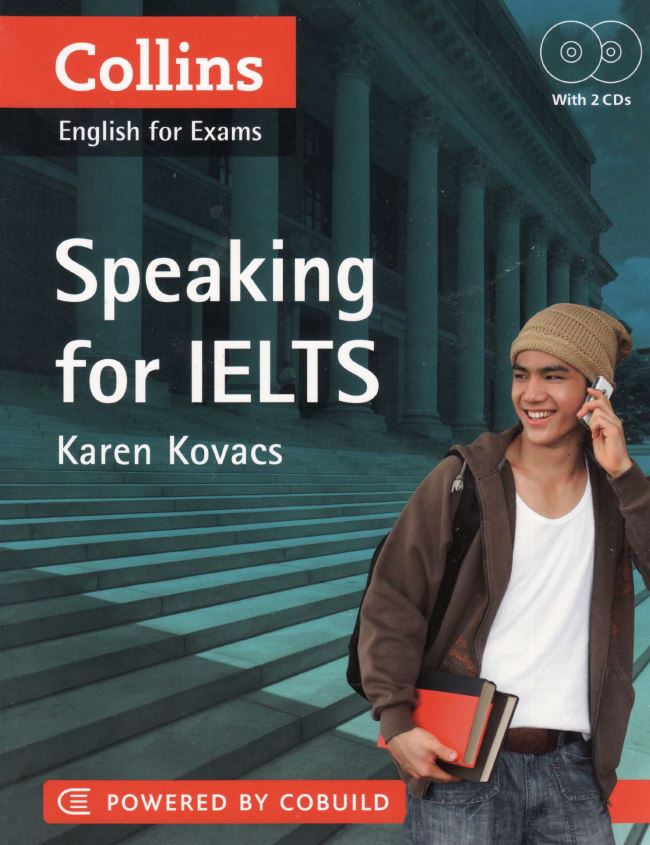
5. Collins series .. which is considered one of the most reliable IELTS Materials to pass the exam with high score


6. Grammar Vocabulary for Advances 


7. IELTS for Academic Purposes 


8. Achieve IELTS 


9. IELTS : How to write 


10. Cambridge Practice Test for IELTS series 


الأربعاء، 1 أغسطس 2018

Tricky & Situational PMP Exam Questions - How to solve them

In PMP Exams, the Situational & Tricky questions constitute a huge part of the questions that could let you fail if you don't have any idea about how to deal with them. A clear strategy you have to follow when you are practicing real exams and when you take the PMP exam itself, below are some guidelines and strategies to follow at the exam:


1. Follow the rule of removing/Eliminating the wrong choices for the questions that you don't know their answer.


Usually, and out of 4 choices, there is at least 1 choice you can easily exclude or remove, and this choice usually is not complying with code of ethics & professional behavior, for example when you find one choice describe a penalty that was done directly by the PM to an employee or the PM has decided to remove a team member away from the project without investigation, such choices shall be considered as a wrong answer.


2. Read the answers first for the long questions.


You will encounter long questions in PMP exam, some of them with more than 9 rows, in these cases start reading the choices first then turn to the question itself, reading the choices in this case will give you an indication on what you have to emphasis and to give more attention, in such questions many extra information are given which you don't  need and you will not use them for solving the question, these distracted data can be easily discovered in lengthy questions when you start reading the choices.


3.  Answer all questions you see even if you don't know the right answer.


In PMP exam, you can mark the questions that you are not sure if you answered them correctly in order to check them later, Anyway DON'T LEAVE ANY QUESTION WITHOUT ANSWER, in case you are not sure about question(s), just mark them and choose the most suitable choice for you, many PMP students could not check their answers later as the time of the exam is limited and there is a big possibility that you will consume all of the time when you reach to question #200 !!


4. Memorize the ITTO for the 49 processes.


In PMBOK - Version 6, the processes increased up to 49 process, around 12 direct questions in PMP exam are about Inputs, Tools & Techniques and the outputs of these 49 processes, you have to be sure that you are memorizing them before starting the exam.

See Also: The Main Formulas you have to memorize for PMP Exam - Version 6
http://academyoflions.blogspot.com/2018/07/main-formulas-you-have-to-memorize-to.html

5. Be careful about the first 4-5 questions in the exam.


Many PMP students who failed PMP exam were complaining about the beginning of the exam's questions as they have faced questions they don't even hear about, don't panic! there are 25 questions in PMP exam will be removed before calculating your final test result, some exams start in a difficult & unclear questions to check the students against the hard times and if they can keep calm & overcome these impediments.


6. Read the end of the questions CAREFULLY.


At the end of most questions you will see words like the Best, Except, Most Likely, Least likely, Not .. etc , don't go fast to the answers until being sure that you have read the last one or two words in the question.


7. Use the 15 minutes Tutorial.


You will be given a 15 minutes before starting the exam to clarify the way the exam will be performed, these 15 minutes are in fact long time for exam clarification, you can also check some videos on youtube to know more about this tutorial, at maximum you will need 5 minutes out of 15, the remaining 10 minutes you can use to write the equations, ITTO's and any other thing you have a difficulty in memorizing, you will be provided with a pencil and papers at the beginning of the exam, use them to write down the aforementioned points. 


8. Practice real exams before sitting for your one.


You can use the link below to test your self, it contain a real PMP exam with 200 questions, you will find the answers at the end of the exam.


http://academyoflions.blogspot.com/2016/11/free-pmp-online-training-course.html


9. Memorize the Planning processes in ORDER.


Many questions you will see in PMP exam asking about what happened next? or what is the next process that the PM shall perform? in planning, the processes are coming in order (chronologically), for example: the process that shall come after qualitative risk Analysis is the quantitative risk Analysis, and so on for all planning processes.


10. Read all answers before you choose the correct one.


Usually, PMP exam's questions have 2 right answers and you have to choose the most correct one, don't choose the answer just because you have read it, take a look to all choices before you choose your one, this trick led many students fail the exam at first trail.


الجمعة، 27 يوليو 2018

250 Words that are usually mentioned in TOEFL Exams - Test Your Vocabularies

In TOEFL Exam, and after studying more than 1,000 Exams around the world, Analysis has been performed on the frequency of the vocabularies used in them, it was noticed that there are 250 words are frequently exist in TOEFL Exam, If you are planning to get the exam and to achieve the desired results, you have to memorize these vocabularies and to know where they could be used and the best meaning for each one of them.

** Remember that the first step for the preparation of TOEFL exam is supersizing your vocabularies.


Below is these words,

quite
abandon
surpass
intensify
adversely
odd
precipitation
property
upfront
chaos
Disaster
folk
anticipate
tribe
flood
pillar

** See Also: Tips to Pass IELTS Exam (Academic & General)
http://academyoflions.blogspot.com/2017/01/tips-to-pass-ielts-exam-academic-general.html

catastrophic
miscellaneous
impact
corrosion
collide
persevere
kit
eruption
thrust
mammals
plunge
famine
nest
unleash
snoring
efficiently
dormitory
fetching
anomaly
annex
bounty
merchant
grocery
chant
trophy
resist
cascade
preset
cultivation
rank
mist
artillery
cease
progression
consistency
biometric
quiet
mobilize
severely
intuitively
vetting
Repetitive
derogation
extrusion
combustion
irrigation
incurred
constraint
devise
collapse
exaggerated
contamination
intervene
consciously
apex
emission
on behalf of
nucleus
extinction
abusive
depleted
battle
rotate
Lodging
dispose of
shrink
tiny
excursion
awful
permeate
component
allegiance
rigorous
commuting
pertaining
conquest
acquisition
reservoir
Impediment
prevailing
invasive
retrieve
fertilize
indisputable
contemplate
trigger
convey
intimate
solar
degrade
recede
leak
discreetly
source
meditation
chronologically
prominent
diminish
overwhelming
coincide
cemetery
longitude
debut
pineal gland
consequence
acquaintances
imply
slit
milieu
fade
hike
core
stumbling
chores
oral
riot
swag
deny
ruin
cunning
reconciliation
sly
ward
rage
offended
funeral
prosecution
abolished
awesome
scissor
endangered
blackmail
obedience
immerse
allocate
cyber crimes
net
retrenchment
alleged
assaulted
amnesia
collusion
commodity
legacy
fend off
scheming
wardrobe
per capita
obsessed
conspiracy
decline
possession
reluctant
accustomed
adaptation
adhesive
adjacent
adjoin
entrepreneur
adjunct
bestow
bias
eager
earthenware 
Earthquake
eccentric
frugal
avenue
regulate
eventually
affliction
equity
constitute
comprises
fascinated
subsidy
astonished
detained
vocational
inflation
empathy
tangible
bullying
delicate


الأربعاء، 18 يوليو 2018

Main Formulas you have to memorize to pass PMP Exam - Version 6


Below are the main formulas that shall be memorized for PMP - Ver. 6 Exam:

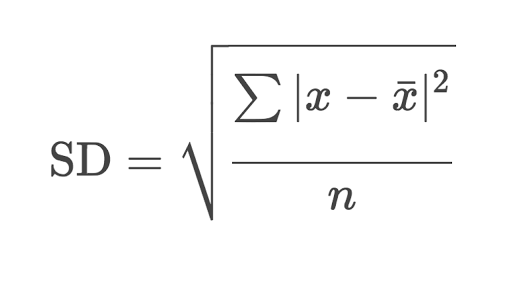
1. Standard Deviation (SD)


SD is a way to measure how much is the variation from the mean. 


usually it is used to analyze data. Standard Deviation is represented by using the symbol sigma (σ).
Sigma is the difference of distribution values on any end and in middle.
σ = (Pessimistic – Optimistic) / 6
A low value of SD shows that the data points are close to mean or average and a high value of SD shows that data points are spread over a large range.
Image result for standard deviation

2. Earned Value

specific technique in which the actual values of the work related performance is calculated for any and all particular work components and of schedule activities
Earned Value = % complete × Budget at Completion (BAC)
For example, if the project team has completed 100 man-hours of work and project required 500 man-hours of work to complete the project, then
% Complete = 100/500 × 100 = 20%
Budget at Completion = Total budget assigned for the project (let it be $50,000 in this case)
Then, EV = 20 × $50,000 = $10,000

3. Schedule Variance (SV)

It is the difference between the earned value and the planned value. 
Schedule Variance = Earned Value (EV) – Planned value (PV)
For example, if EV for an app development project is $40,000 and PV is $50,000 then
Schedule Variance = $40,000 – $50,000 = – $10,000 (which shows that project is running behind the schedule by $10,000 schedule variance)
** Negative value of SV shows that the project is behind the Schedule 
** Positive value of SV shows that the project is ahead of the Schedule.
** Zero SV means that the project is exactly at the Schedule.

4. Schedule Performance Index (SPI)

It is a ratio of the earned value to the planned value. 
SPI = Earned Value (EV) / Planned Value (PV)
 As the same of CPI, it is also a ratio then it can have three values (=1, >1 or <1)
If SPI = 1, it indicates that project is going at the same rate as expected.
If SPI > 1, it indicates that project is going at a faster rate.
If SPI < 1, it indicates that project is going at a slower rate.

5. Cost Variance (CV)

It is the difference between earned value and actual cost.
Cost Variance (CV) = Earned Value (EV) – Actual Cost (AC)
For example, If Earned Value (EV) and Actual Cost (AC) for a project are $75,000 and $60,000 respectively then
Cost Variance = $75,000 – $60,000 = $15,000
The positive of Cost Variance shows the condition of under budget whereas the negative value of Cost Variance denotes the over budget.
The value of zero for the cost variance shows that the project is exactly at the budget.

6. Cost Performance Index (CPI)

It is the ratio of earned value to the actual cost.
CPI = EV / AC
CPI can have three values (=1, >1or <1)
If CPI = 1, then it means that the project is getting $1 for every $1 spent.
If CPI > 1, then it means that he project is getting more than $1 for every $1 spent.
If CPI < 1, then it means that he project is getting less than $1 for every $1 spent.

7. Estimate at Completion (EAC)

It is a forecasting technique to predict the future project performance. 

 There are four Equations to calculate EAC.
1st Equation of EAC
Estimate at Completion (EAC) = BAC / CPI
If CPI = 1 then EAC = BAC which means that the project manager are able to complete the project within the provided budget and without any forecasting analysis. Even at the starting of the project, estimate at Completion is same as that of the Budget at Completion.
2nd Equation of EAC
When the project cost estimation was flawed and the project manager wants to find the new cost estimate for the remaining works, you need to move to the activity level in order to find the cost of each activity, and then add individual costs to obtain the total cost value of the remaining works. In this case,  the following formula is used to calculate the EAC
Estimate at Completion (EAC) = AC + Bottom-up ETC
3rd Equation of EAC
If a deviation happened from the estimated budget but now the project manager can perform the remaining task as per plan. This may happen because of an unexpected condition or increased in cost. so, to calculate the value of EAC in this formula, money spent to date is added to the budgeted cost for remaining project works.
Estimate at Completion = Money spent to date + Budgeted cost for the remaining work
Estimate at Completion (EAC) = AC + (BAC – EV)
4th Equation for the EAC
In this equation, both the schedule and cost are required to be taken into consideration,  this formula is applied to find the value of EAC. It is given as:

Estimate at Completion (EAC) = AC + [(BAC – EV) / (CPI × SPI)]
Estimate at Completion = Money spent up to date + (Budgeted cost for the remaining works – Earned Value) / (Cost Performance Index × Schedule Performance Index)
Image result for estimate at completion formulas

8. Variance at Completion (VAC)

It is the difference of Budget at Completion and Estimate at Completion.
Variance at Completion (VAC) = BAC – EAC
Remember that a $0.0 value for VAC indicates that the project will hit the budget. A value less than $0.0 indicate that the project will be over budget and a value more than $0.0 shows that the project will be under/lower than the budget.

9. Estimate to Complete (ETC)

It is a way demonstrates which value that shall be spent on the remaining works for the project to get the project completed. 
ETC = EAC – AC

10. To Complete Performance Index

It is a measurement for the cost performance that is required to be achieved with the remaining resources in order to meet a specified management target.

There are two ways to calculate the TCPI as stated below:
TCPI = (BAC – EV) / (EAC – AC)
TCPI = (BAC – EV) / (BAC – AC)

11. Communication Channels (CN)
The number of ways by which information flows within the organization or Company.
 communication channels = n (n – 1) / 2
Where ‘n’ stands for the number of stakeholders
If there are 7 stakeholders,  then the number of communication channel is = 7 (7-1) / 2 = 21 channels 
(Remember that a stakeholder may be an individual, a group or an organization that is affected by the decision, activity or result of the project)

** Remember that usually there is 1 direct question about this formula in PMP exam.

K4

Most Repeated Topics in Reading Section in TOEFL Exams

Reading Section is one important part in both IELTS & TOEFL Exams which constitute 25% of the overall score in exam. After studying Hun...

text ad

Sidebar

lacademy